


Architecture exhibition. 16.05. - 30.06.2009. Berlin, Germany
HOUSE RR
 |
 |
 |
 |
 |
 |
 |
 |
 |
HOUSE RR
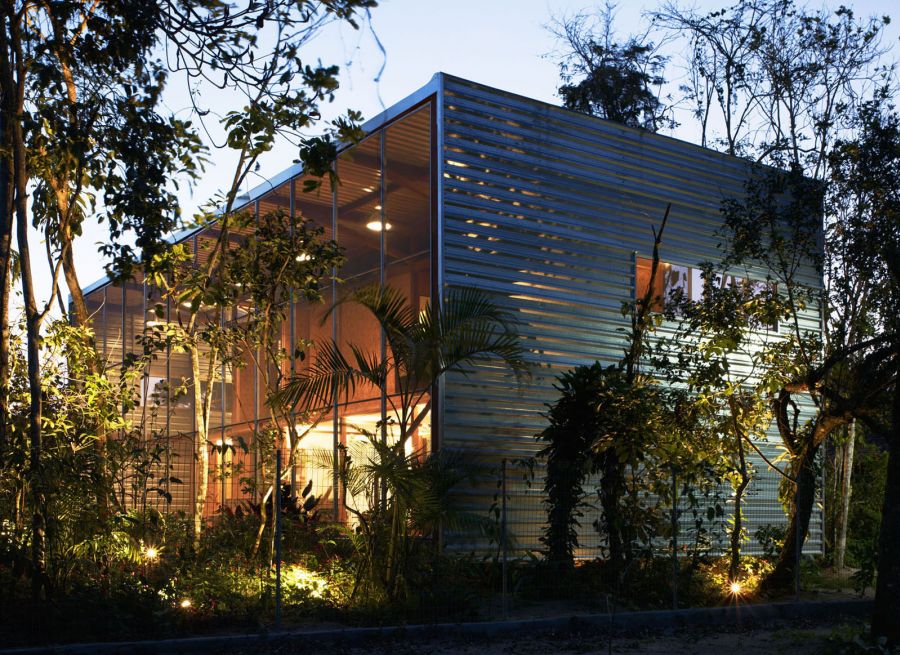
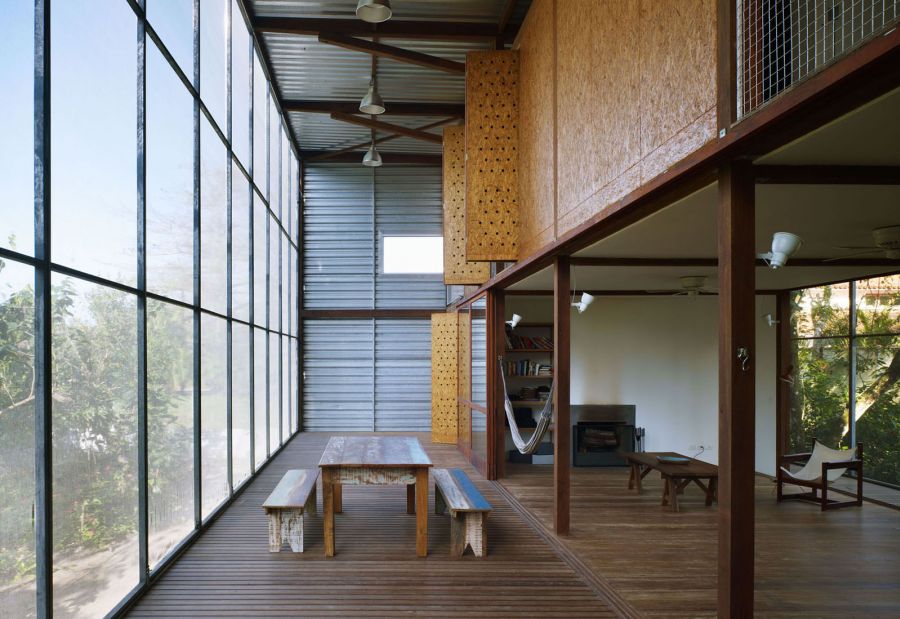
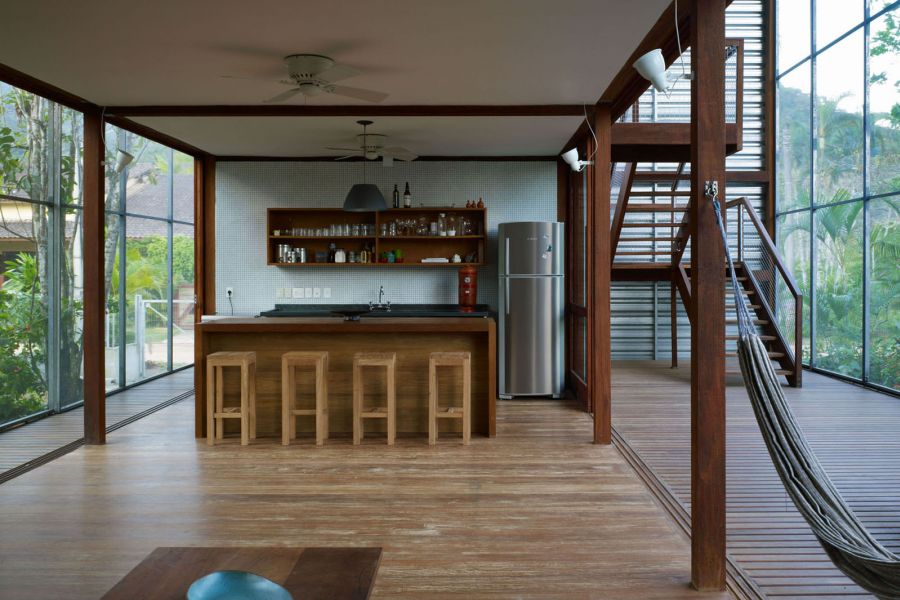
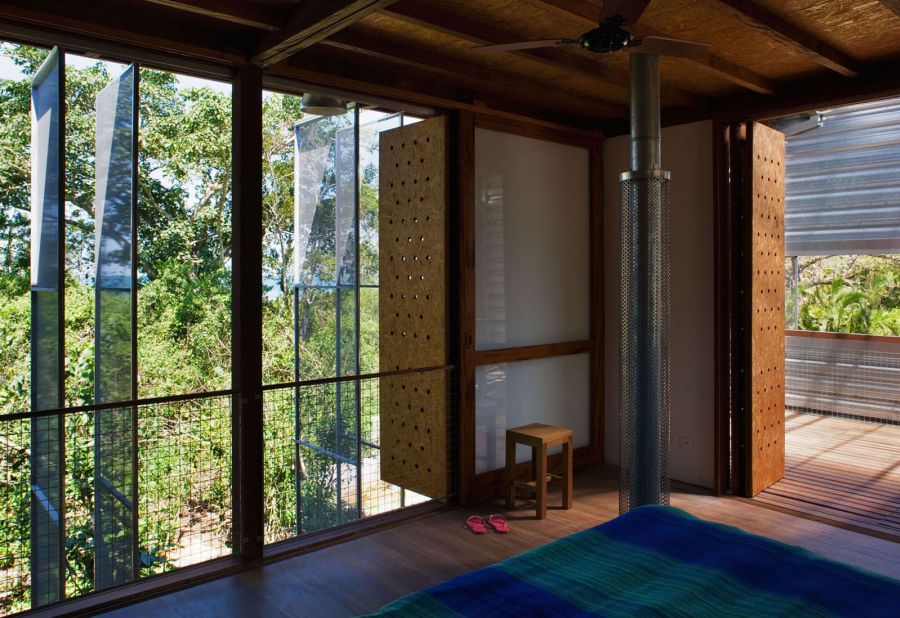
This summer house is situated at a few meters distance of the sea, on the north coast of the State
of São Paulo, a place with exuberant vegetation and hot humid climate. We began the project with the idea
of a big shelter, a “shell”, under which we could locate the programme, protected from the intense sun
and the frequent rains, however without blocking the permanent natural cross ventilation.
This roof of six meters high, with a surface of eighteen by eight meters, was built using a prefabricated timber
structure with galvanized steel joints. The lateral and top faces are made of steel cladding with EPS filling.
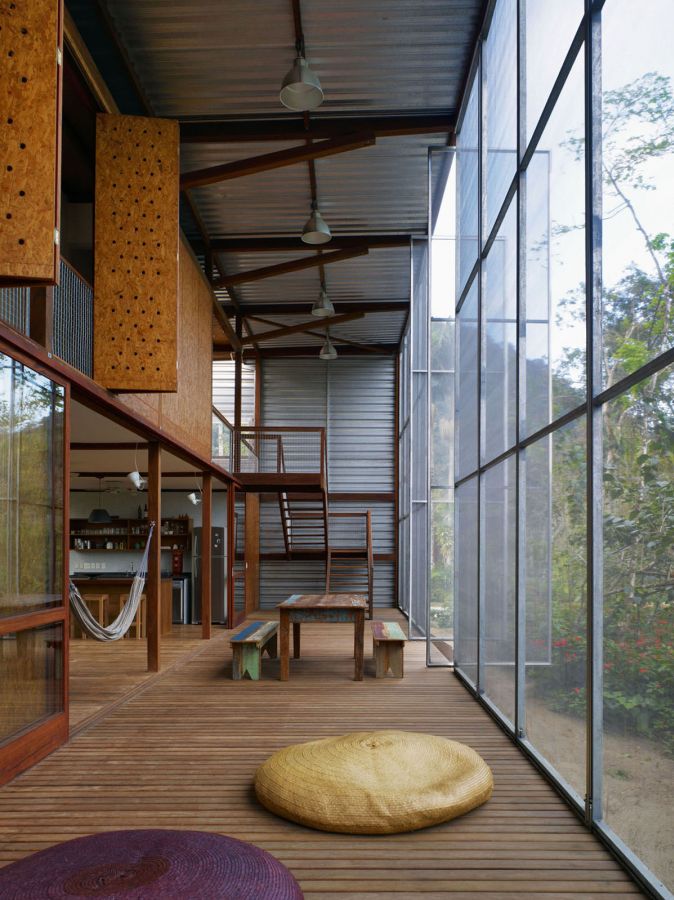
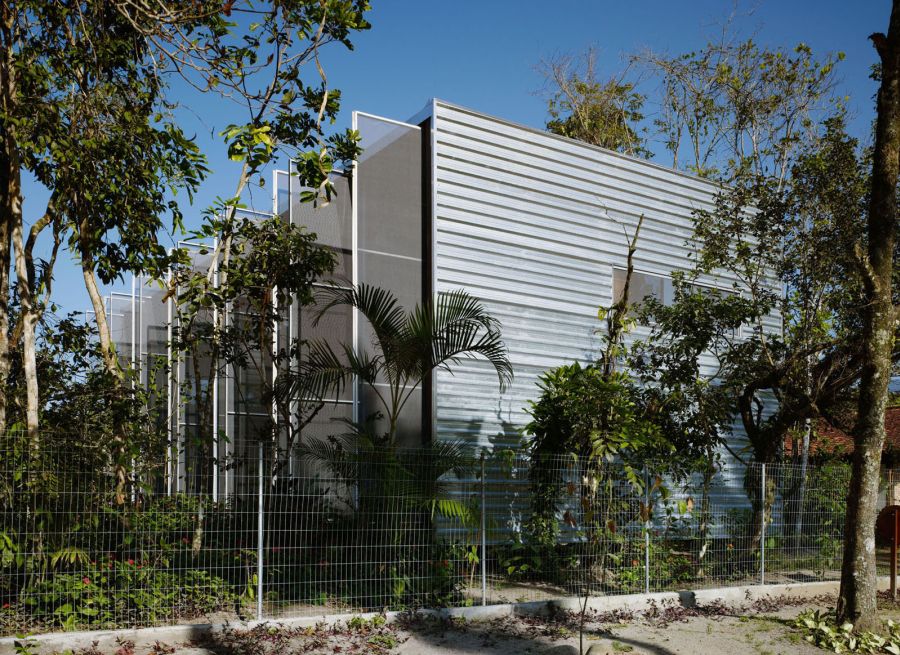
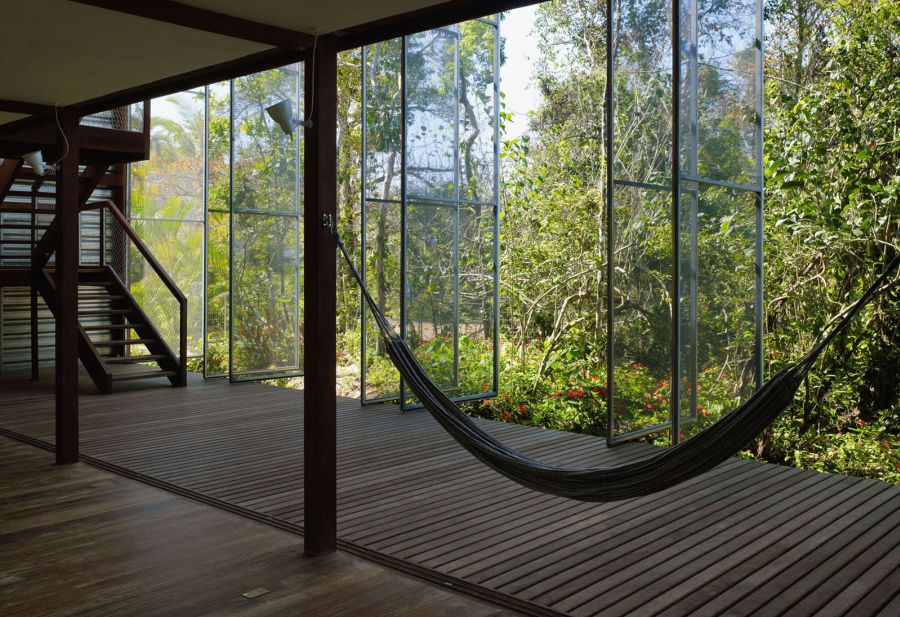
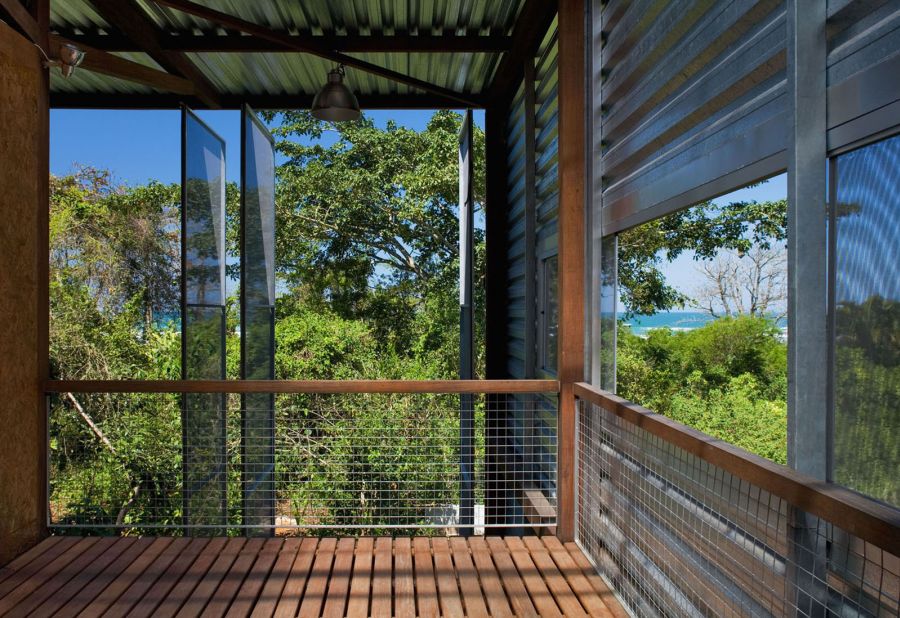
In the two large facades of the house, generously open to the scenery, panels of glass fiber mosquito
screens with PVC coating were installed, pivoting or sliding, with the intention of creating an external
membrane, capable of keeping the insects out, without creating an obstacle for the ocean view and wind.
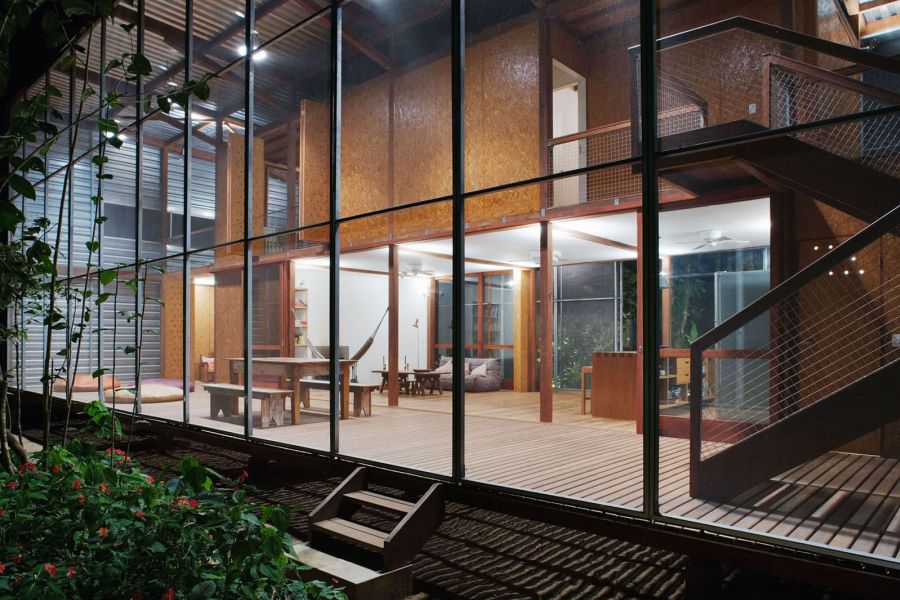
The whole structure is elevated 75cm above ground level, supported by concrete pillars cast on site.
All other components used in the construction are pre-fabricated and were simply mounted in place on
the construction site. The adopted constructive system, besides reducing assembly time and errors,
assured a dry construction site, with little generation of waste and low environmental impact.
Bioclimatic Performance / Environmental Performance
Based on the belief that good design can reduce the carbon footprint more than technological supplements
and considering the quality of the environment (humid tropical region), shade and ventilation are understood
as essential strategic resources to achieve good bioclimatic performance.
Instead of deploying expensive green technologies, this house seeks to respond to the ecological issues
basically by means of reduction, with economical use of materials: “Lightness”. In the same manner, having
its functioning based on passive principles, the building demands a minimal consumption of energy
for operation and maintenance. Materials with a small mass or thermal inertia were employed, avoiding
the accumulation of heat during the day, since the nights are equally hot. The use of bright surfaces also
minimizes the absorption of solar radiation. The possibility of generation of clean energy on the site, however,
is not abandoned. According to the financial situation of the owners, the house may carry photovoltaic
panels on the roof.
Materials
> Foundation: reinforced concrete
> Structure: timber with galvanized steel joints
> Floors: wooden deck
> Roof and side façades: thermo-acoustic steel cladding with EPS filling
> Mosquito screen façades: glass fiber screen with PVC coating in steel frames
> Railings: steel frames with welded wire mesh
> Internal walls: OSB category 3 (PU) and dry-wall gypsum boards
> Ceiling: gypsum boards
> Impermeabilization: adherent butilic mantle
> Water reservoir: low drums in stainless steel
Project Data
> Lot: 500m²
> Area: 220m²
> Completion date: June 2007
> Project: Andrade Morettin Associated Architects
> Architects: Vinicius Andrade, Marcelo Morettin
> Coordinator: Merten Nefs
> Collaborators: Marcio Tanaka, Marcelo Maia Rosa, Marina Mermelstein, Renata Andrulis
> Structure: Ita Construtora
> Construction: Vicente Ganzelevitch
> Foundation: Eng. Pedro Negri
> Eletrics: Eng. Nilton José Maziero
> Photos: Nelson Kon
Copyright 2007 - 2009 architeria.eu all rights reserved

