


Architecture exhibition. 16.05. - 30.06.2009. Berlin, Germany
Deutsches Architekturmuseum
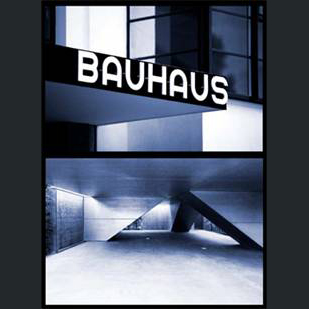
“Bauhaus twenty-21”
Exhibition: March 7 - April 26, 2009
Photographs by Gordon Watkinson
Many consider Bauhaus, which like almost no other movement in architecture or design so defined
a style, the very synonym of classical Modernism. Under the title “Bauhaus twenty-21” Deutsches
Architekturmuseum is showcasing 12 of the most important works of Bauhaus architecture in dialogue
with 12 contemporary building projects by renowned contemporary architects – all illustrated by
a series of images created by US photographer Gordon Watkinson. The exhibition, and it bridges
the fields of architecture, design and photography, places the heritage of Bauhaus architecture
in the context of current architectural trends and visualizes its ongoing influence on 21st-century
architecture.
In his highly aesthetic, toned black-and-white shots, taken as of the end of the 1990s, architectural
photographer Gordon Watkinson, who resides in New York, focuses on the superlative quality of
the buildings all over Europe erected prior to 1933 by architects such as Walter Gropius,
Ludwig Mies van der Rohe, Adolf Meyer, Georg Muche and Richard Paulick. He juxtaposes them to
contemporary, typologically similar buildings. Among the present-day architects whose works can be
seen in the exhibition are Allmann Sattler Wappner, Rolf Disch, Hanno Vogl-Fernheim, Fink + Jocher,
Galli & Rudolf, Ingvartsen, Graham Phillips, Petzinka Pink, RCR, Sauerbruch Hutton, Werner Sobek
and Wingårdhs.
The numerous photographs, which highlight the aesthetics of New Objectivity and Functionalism,
are complemented by a walk-in installation containing re-editions of Bauhaus furniture. Designed in the
1920s and ‘30s, these are still manufactured by companies such as Knoll, Tecnolumen, Tecta and Thonet.
Devised deliberately as a counter-concept to the aesthetics of historicism, Bauhaus ambitions extended
well beyond pure issues of design; functionally designed objects, apartments and houses as well as
the renunciation of ostentatious details were all an integral part of an agenda for social modernization
that sought to dismantle class and social differences. The exhibition also includes succinct theoretical
texts and architectural drawings that offer a new perspective on the design philosophy of the State
Bauhaus College established in Weimar 90 years ago, and its influence on subsequent generations
of architecture through to the present. Today, this abstract aesthetics as championed by
Mies van der Rohe is being nurtured to a greater extent than ever before, and refined with advanced
building technologies. Skywood House in Denham, the brainchild of Graham Phillips, can be considered
a direct descendant of Mies van der Rohe’s famous German Pavilion in Barcelona. In this context even
such different typologies as municipal project housing in Copenhagen, the private school in Wädenswil
near Zurich, the Employment Center in Reutte/Tirol, and Villa Roser in Skara/Sweden all clearly bear
common traits.
The exhibition is curated by Gordon Watkinson in cooperation with Foto+Synthesis, Berlin/New York.
The latter was advised by Michael Siebenbrodt, Director of the Bauhaus Museum in Weimar, also by
Falk Jaeger, architectural critic and journalist from Berlin. The exhibition is sponsored by UNESCO
and also supported by the German Federal Foreign Office and Goethe Institute.
A lavishly illustrated catalogue will be published Birkhäuser Verlag, Basel to coincide with the exhibition by.
Projects in the exhibition: 01
House am Horn, Weimar (Georg Muche/Adolf Meyer, 1923)
House of the Present, Munich (Allmann Sattler Wappner Architects, 2005 / Germany)
02
Director’s Office, Weimar (Walter Gropius, 1923–31)
Law Office, Düsseldorf (Architect Thomas Pink | Petzinka Pink Architects, 2004 / Germany)
03
Bauhaus Building, Dessau (Walter Gropius, 1925–26)
Federal Environmental Agency, Dessau (Sauerbruch Hutton Architects, 2003 / Germany)
04
Masters’ Houses, Dessau (Walter Gropius, 1925–26)
Villa Roser, Skara (Wingårdhs, 2005 / Sweden)
05
Törten Settlement, Dessau (Walter Gropius, 1926–28)
Solar Estate, Freiburg (Rolf Disch, 2002 / Germany)
06
Balcony Access Houses, Dessau (Hannes Meyer, 1929–30)
Student Housing, Garching/Munich (Fink + Jocher, 2005 / Germany)
07
Employment Office, Dessau (Walter Gropius, 1927–29)
Employment Office, Reutte (Hanno Vogl-Fernheim, 2006 / Austria)
08
Steel House, Dessau (Georg Muche/Richard Paulick, 1926–27)
M-Lidia House, Montagut/Girona (RCR Architects, 2003 / Spain)
09
German Trade Union School, Bernau (Hannes Meyer, 1928–30)
Zurich International School, Wädenswil/Zurich (Galli & Rudolf, 2002 / Switzerland)
10
Apartment House Weissenhof Settlement, Stuttgart (Ludwig Mies van der Rohe, 1927)
Housing Guldbergsgade, Copenhagen (Ingvartsen Architects, 2002 / Denmark)
11
German Pavilion, Barcelona (Ludwig Mies van der Rohe, 1929)
Skywood House, Denham (Graham Phillips, 2000 / UK)
12
Villa Tugendhat, Brno/Czech Republic (Ludwig Mies van der Rohe 1930)
House R 128, Stuttgart (Werner Sobek, 2001 / Germany)
-------------------
Text and image: Deutsches Architekturmuseum
Copyright 2007 - 2009 architeria.eu all rights reserved

