


Architecture exhibition. 16.05. - 30.06.2009. Berlin, Germany
Jorge Pardo | House
 |
 |
 |
ARCHITECTURE EXHIBITION
Museum of Contemporary Art, North Miami
Miami FL, USA
Jorge Pardo | House
4 December 2007 - 2 March 2008
The Museum of Contemporary Art (MOCA) will present Jorge Pardo: House, a major mid-career survey
featuring the work of Jorge Pardo from December 4, 2007 through March 2, 2008. Over 60 key works,
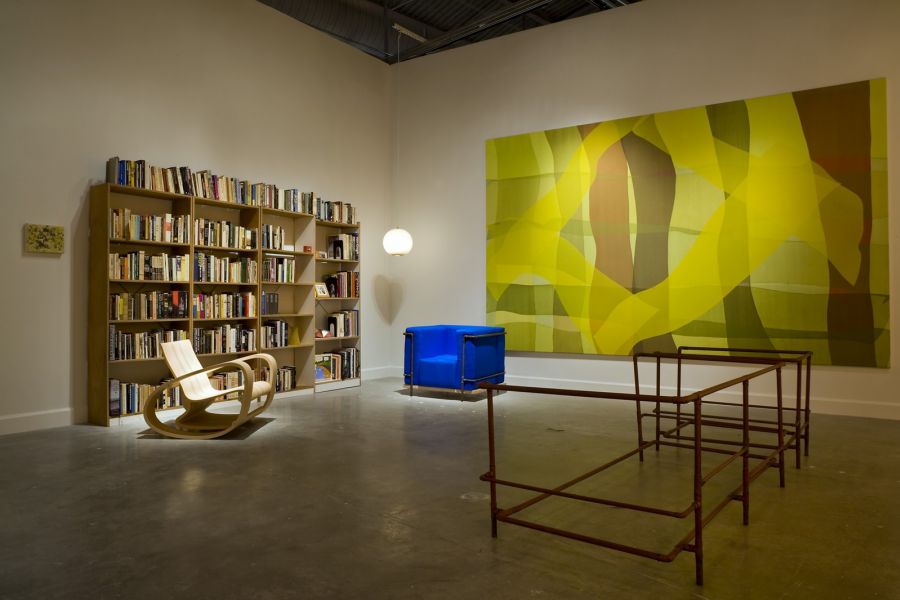
including sculpture, installations, and paintings that cross the boundaries of art, design, and architecture
will be presented according to their utilitarian typology in vignettes representing various rooms and areas
in a house. Although Pardo has created large-scale projects for museums throughout the world, this is
his first comprehensive U.S. museum exhibition. While the works incorporate elements of minimal and
Modern art, the disparity between their function and form contradicts the rules of modernism and reveals
Pardo’s personal and autobiographical response to everyday objects and his environment. In keeping with
the genre-crossing characteristics of Pardo’s work, the exhibition will extend beyond the museum itself
to encompass site-specific projects around the world, including Pardo’s own house in Los Angeles.
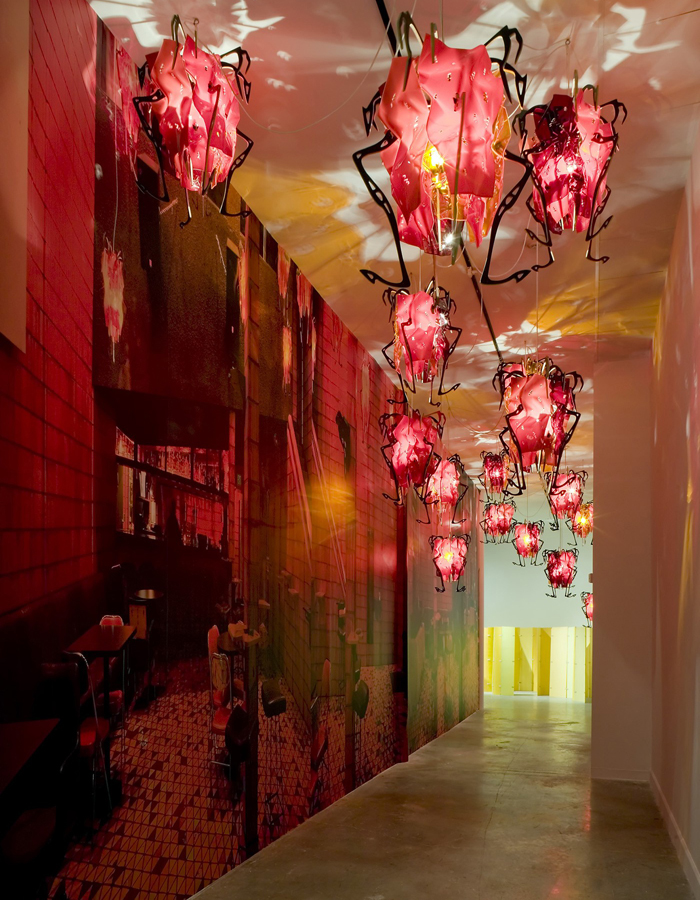
These projects will be presented as photomurals at MOCA and viewers will be encouraged to visit
the sites themselves. Jorge Pardo: House is organized by the Museum of Contemporary Art, North Miami
and curated by Bonnie Clearwater.
Pardo's work has been widely exhibited in museums, galleries and public spaces since the late 1980s,
but it remains among the most difficult to define. The meaning of his work shifts according to the way it is
categorized, installed and used. Pardo defines the objects he creates as "paintings," "drawings," and
"sculpture,” but to the viewer these objects may look like a glass globe lamp, decorative tabletop, or a chair.
Pardo created most of his work for installations at galleries, museums, or specific locations. His projects and
groupings of works embodied a particular course of exploration and inquiry into the aesthetic experience that
Pardo pursued at the time they were created. The gallery space or site itself established the framework that
influenced the viewer's response. In most cases, these installations were dismantled after the exhibition and
the individual objects were dispersed to collectors and museums. Some collectors use these works as
functioning furniture. A bedroom set Pardo designed in the 1990s, for example, furnishes a collector’s
bedroom, and Pardo's lamps illuminate homes throughout the world. Installations for the Dia Art
Foundation's bookstore and lobby in New York and Philadelphia’s Fabric Workshop and Museum's video
lounge were designed to be used by visitors. Pardo's family lives in the house in Los Angeles that he built
as his solo exhibition for the Museum of Contemporary Art, Los Angeles. Other collectors and museums
present these objects as art works to be looked at, but not touched. As Pardo notes, "When you open
up the context, you cannot control how it will be used."
Instead of recreating the original installations for this museum survey, Pardo created a new context for the
work that is at once familiar and disarming. Jorge Pardo: House adopts the premise of a “home” in which his
works are organized and presented in separate vignettes that represent various areas of a house: garden,
kitchen, dining room, bedroom, etc. The work is organized and placed according to its apparent function:
beds, chest of drawers, and sexy, high-heeled slippers, are arranged in the bedroom, a refrigerator
and table define another gallery as the kitchen, and an architectural folly establishes another area
as the garden. In each gallery, mural-sized photographs of corresponding rooms in the houses Pardo
built and installation views of exhibitions create a disorienting space for viewers that oscillates between
the physical space they are occupying and the space represented in the photo-mural.
By reassembling works from the past to the present in this exhibition, the artist's career becomes better
defined. Pardo belongs to the first generation of artists to use computers as a tool for creating work.
(His class at Art Center College of Design in Pasadena was the first to be given Apple computers.)
The exposure to the computer radicalized his thoughts about categorization and the simultaneity of information.
His paintings, for instance, are created on the computer and consequently exist in a suspended state. They
have the potential of existing in a variety of shapes, sizes, colors, or formats until Pardo creates the physical
work. Multi-tasking is a trait Pardo and most of his generation, take for granted, and the environments he
creates lend themselves to multi-tasking and a multiplicity of meaning. Viewers are often confounded by their
attempts to determine where and on what they should focus in his installations. There is no clear hierarchy
between the objects and the architecture containing them.
The use of architecture to establish an experience for the viewer is especially apparent in House. Pardo
designed the floor plan to control the way people enter the gallery and to heighten their sensitivity to the
environment. There is no clear path through the exhibition. The kaleidoscopic angled effect of the walls
creates a disorienting space and the imposing photomurals compete with the objects for the viewer's attention.
Although Pardo's work provokes thought, he does not start with an idea that he aims to transform into
a physical object. Rather, his approach is more speculative, and as he works he poses more problems to
himself. Over the course of the years, Pardo's work has become less anecdotal. He even eliminated titles for
his work because it limited their meaning. In his estimate, his most successful works function phenomenological
rather than didactically.
Jorge Pardo was born in Havana, Cuba in 1963. He currently lives and works in Los Angeles.
-----------
CREDITS:
Text: Museum of Contemporary Art, North Miami
Photographs by: Steven Brooke
Address and Phone
The Museum of Contemporary Art is located at 770 NE 125th Street, North Miami, FL 33161.
For information, call 305.893.6211 or visit www.mocanomi.org.
Exhibition Catalog
The exhibition is accompanied by a catalogue with an essay by Bonnie Clearwater. It also includes
a response to the artist's house written by his wife, the novelist Veronica Gonzalez.
Funding
Jorge Pardo: House is sponsored by Christie's.
Opening Reception
Tuesday, December 4, 7:00 – 9:00 pm
Exhibition Tour
Jorge Pardo: House is on view at the Museum of Contemporary Art, North Miami from December 4,
2007 - March 2, 2008. The exhibition will also be presented at the Museum of Contemporary Art,
Cleveland in Fall 2008. Other venues to be announced.
Hours and Admission
MOCA is open Tuesday through Saturday from 11 am to 5 pm and Sunday from noon to 5 pm, with
additional evening hours on the last Friday of every month from 7 - 10 pm in conjunction with Jazz
at MOCA concerts. General admission is $5 for adults and $3 for seniors and students with ID.
Residents of North Miami, employees from the City of North Miami and children under 12 are free of charge.
Copyright 2007 - 2009 architeria.eu all rights reserved

